
Table of contents
- Is sustainable National Park lodging a profitable investment?
- Market demand for accommodations in National Parks is accelerating
- Why proximity to National Parks drives occupancy and revenue
- What types of accommodation options are available inside major National Parks?
- Minimal ecological footprint for National Park accommodations from Crossover Lodge
- Sustainable and compliant National Park lodging options
- Premium guest experience without environmental impact
- Affordable luxury glamping tents with high ROI for National Park Vacations
Is sustainable National Park lodging a profitable investment?
For Park Superintendents, Sustainability Officers, and CEOs of concessionaires, the first question is never about design or aesthetics.
It is about operational feasibility, regulatory compliance, long term durability, and return on investment.
When evaluating accommodations in national parks, decisions are driven by data, not emotion.
Market demand for accommodations in National Parks is accelerating
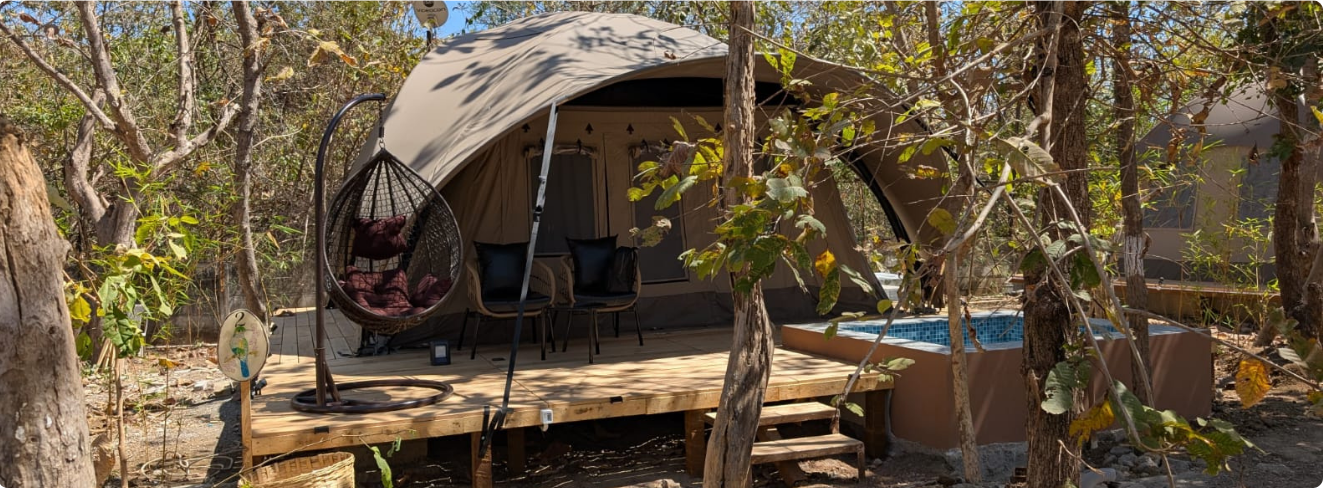
Market indicators confirm a clear shift toward premium, low impact lodging models.
- The global glamping market is projected to reach USD 3.81 billion in 2025 and grow to USD 6.38 billion by 2030, with a CAGR of 10.87 percent. (Source)
- In the United States, the Great American Outdoors Act allocates up to USD 1.3 billion annually to reduce deferred maintenance in national parks, with increasing emphasis on modern and sustainable lodging models. (Source)
- Eco friendly glamping locations report 35 percent higher occupancy rates compared to traditional campgrounds.
For operators responsible for national park lodging, these numbers show one thing clearly. Low impact premium accommodation is becoming a core infrastructure solution, not an optional upgrade.
Why proximity to National Parks drives occupancy and revenue
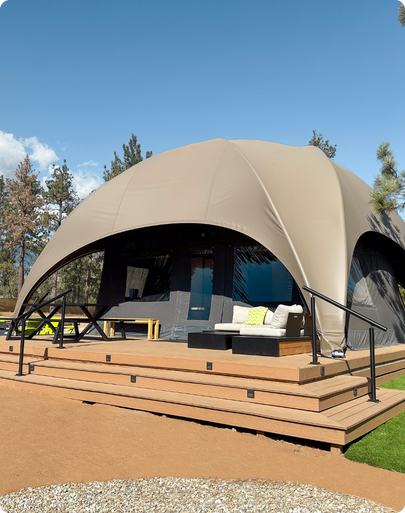
The strategic development of premium accommodations adjacent to protected areas is no longer a localized trend. It is a global movement shaping the future of national park lodging. Across the United States and internationally, concessionaires and land managers are redefining how accommodations in national parks align with conservation goals and visitor expectations.
From the edges of South Africa’s Kruger National Park to the buffer zones of Patagonia and the Australian Outback, operators position high quality lodging near protected landscapes while respecting regulatory boundaries.
Data highlights the strength of this trajectory:
- Market Proximity
In the US, approximately 33 percent of glamping operations are located directly adjacent to national parks, while 51 percent are near state parks. - Global Scaling
Internationally, concessionaires increasingly use buffer zones to offer premium access without impacting core conservation areas.
The driver behind this shift is universal. Modern travelers want full immersion in nature without sacrificing comfort, safety, or reliability. This has transformed national parks glamping into a scalable and revenue driven national park lodging option.
What types of accommodation options are available inside major National Parks?
Most major national parks offer a mix of historic lodges, fixed cabins, RV sites, and basic campgrounds. While functional, these options are difficult to scale, slow to permit, and often misaligned with modern guest expectations.
Permanent structures come with long approval timelines and irreversible impact. Traditional campsites offer minimal comfort and limited revenue potential. This leaves a growing gap between preservation goals and visitor demand for high quality stays.
Modular glamping lodges provide a solution that bridges this gap. They offer hotel level comfort while remaining fully removable and compliant with strict environmental regulations.
Minimal ecological footprint for National Park accommodations from Crossover Lodge
Environmental impact directly influences permits, public acceptance, and long term operational flexibility.
Leave no trace foundations and reversible National Park housing
Crossover Lodge uses elevated decking systems that:
- Do not disturb soil structure, root systems, or wildlife
- Avoid concrete or permanent foundations
- Can be fully removed without leaving a permanent footprint
The lodges themselves are fully demountable. If removal is required, the natural landscape remains intact.
Off grid and weatherproof lodging
The glamping tents from Crossover Lodge are suitable for off grid or hybrid installations and can be combined with:
- Solar energy systems
- Rainwater collection systems
- Septic compatible Nature Ensuite bathrooms
- Decentralized waste and water management
The lodges are engineered for extreme conditions:
- Wind resistance up to 100 km per hour
- Temperature range from minus 30 to plus 70 degrees Celsius
This ensures reliable national park lodging in remote and climate sensitive locations.
Sustainable and compliant National Park lodging options
National parks operate under strict frameworks such as NEPA in the US and Natura 2000 in Europe. Compliance must be structural, visual, and measurable.
Durable materials and long term compliance in protected areas
Crossover Lodge structures are built with:
- Aluminum alloy 6082 T6
- Galvanized steel connectors
- Stainless steel 316 cables
These materials deliver long service life, minimal maintenance, and high structural strength.
Additional sustainability measures include:
- Tent fabrics with a lifespan of at least ten years
- Zero waste production, where fabric cutouts are reused for secondary products
Biophilic design that integrates National Park lodging into the landscape
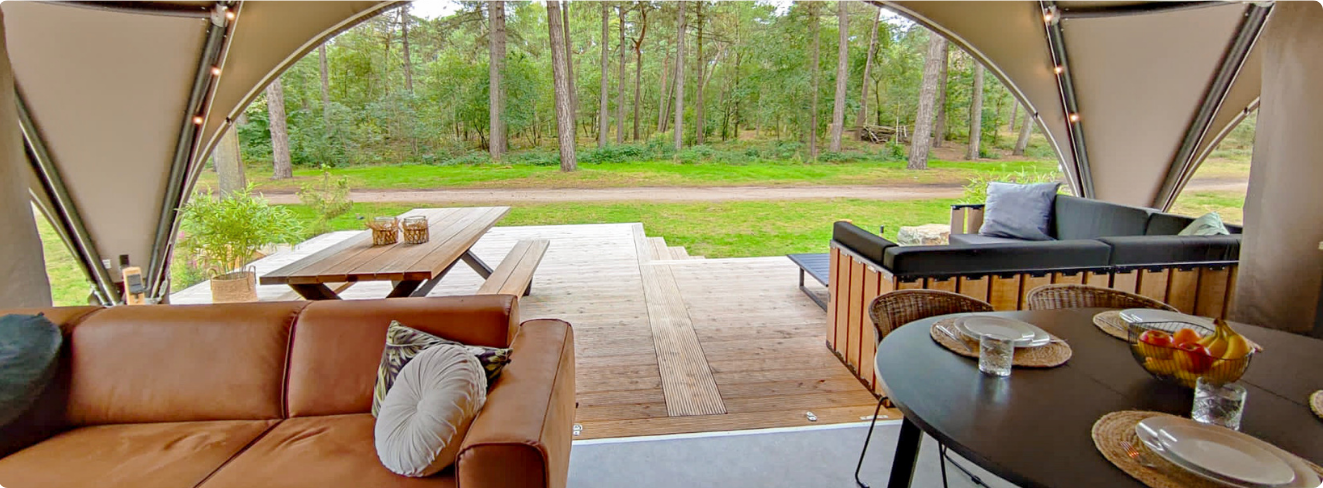
Visual impact is a critical concern in protected areas. Crossover Lodge units are fully customizable, allowing operators to:
- Match exterior colors to the surrounding environment
- Adapt layouts to terrain and vegetation
- Design interiors aligned with biophilic principles
This flexibility supports both regulatory approval and public acceptance of national park housing. Have a look at our configurator to design your glamping tent.
Premium guest experience without environmental impact
Visitor expectations have evolved. Even in remote areas, comfort and privacy are now baseline requirements.
Crossover Lodge works with sustainability focused partners to deliver:
- Premium bedding systems
- Energy efficient climate control
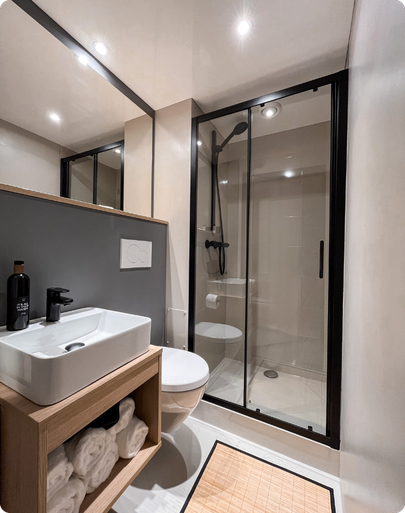
- Integrated or standalone bathrooms
This allows operators to offer a high end glamping tent with bathroom, delivering exceptional comfort while preserving ecological integrity.
Affordable luxury glamping tents with high ROI for National Park Vacations
For national parks, affordability is not defined by the lowest upfront cost, but by long term operational efficiency, lifespan, and return on investment.
From a financial standpoint, the eco glamping tents from Crossover Lodge are highly attractive. Comparable premium operators charge between 350 and 600 euros per night. At just 100 rental nights per year, a single unit can be recouped in approximately six months. By adding sidewalls, the rental season can be extended, further increasing annual revenue and improving overall yield.
Luxury glamping tents that combine durability, guest comfort, and fast installation consistently outperform traditional camping models. Structures that last for decades, require minimal maintenance, and support premium nightly rates deliver predictable and scalable returns.
Crossover Lodge units are engineered for year round use, extreme temperatures, and high wind conditions, while offering a boutique hotel level interior experience. This balance allows parks and concessionaires to offer affordable luxury at scale, without permanent construction or environmental compromise.
This is why national park lodging solutions continue to outperform conventional camping models. Have a look at our ROI calculator to estimate your projected return.