
The question are campgrounds profitable comes down to one thing. Numbers. Revenue potential, cost structure, capital intensity, and return on investment.
For anyone evaluating is a campground a good investment, the answer depends on how the campground is structured, what accommodation types are offered, and how efficiently land is monetized. A campground can be marginally profitable, or highly scalable with strong long term returns.
This article breaks down margins, campground revenue, operating costs, seasonality, and asset appreciation. All with concrete examples.
Table of contents
- Is owning a campground profitable? Net margin and payback period.
- Revenue streams that determine campground profitability
- Glamping as a primary revenue engine
- Private sanitation as a revenue multiplier
- Service based revenue and value creation for more campground revenue
- Sustainability as a financial lever
- Example ROI Calculation for a small to medium Campground
- Operation costs and burn rate
- FAQ about owning a campground
Is owning a campground profitable? Net margin and payback period.
When analyzing is owning a campground profitable, two metrics matter most. Net margin and payback period.
Average profit margins
Across small to medium sized campgrounds, net profit margins typically range between 10 percent and 20 percent. Margins on traditional pitches alone often sit at the lower end of that range.
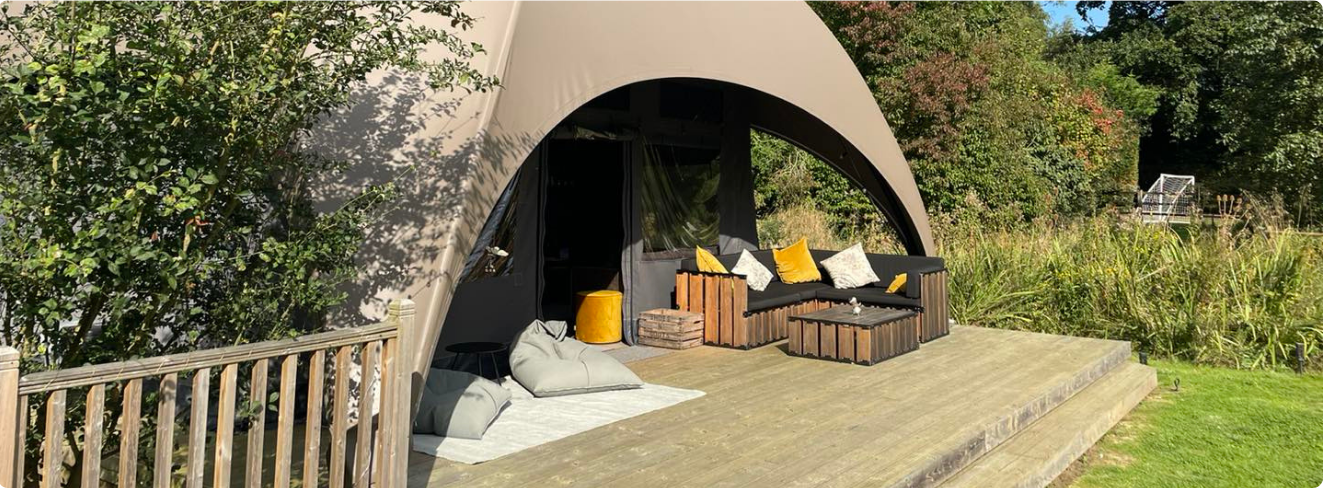
Campgrounds that integrate glamping tents and private sanitation achieve significantly higher margins due to higher nightly rates and lower land usage per guest.
ROI expectations
A traditional campground often requires 5 to 10 years to recoup the initial investment. Introducing premium accommodation can reduce that period substantially. (Source)
This difference defines whether owning a campground is a slow capital hold or a scalable hospitality investment.
Revenue streams that determine campground profitability
Sustainable campground revenue is not driven by volume alone. It is the result of combining high yielding accommodation with scalable service based income. Modern campgrounds maximize revenue per square meter rather than the number of pitches.
Accommodation based revenue
Pricing power varies significantly depending on the accommodation offered.
• Standard camping pitch typically generates 40 to 60 euros per night
• Comfort pitch with private sanitation generates 60 to 100 euros per night
• Glamping tent with a private bathroom generates approximately 200 euros or more per night
From a financial perspective, one glamping unit can equal the annual revenue of several traditional pitches while using a fraction of the land.
Glamping as a primary revenue engine
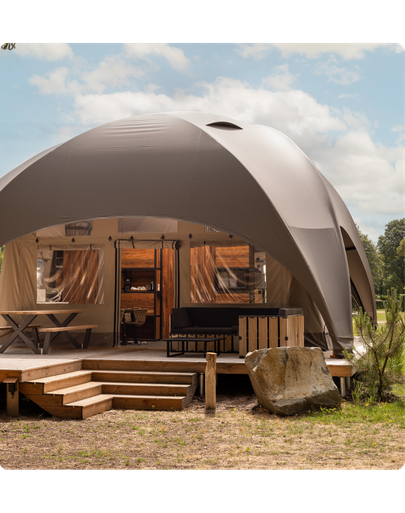
Crossover Lodge luxury camping tents are designed for operators who require predictable performance, fast deployment, and long asset life.
Operational advantages include:
• TÜV certified structural system
• Proven resistance to storms and extreme weather
• Modular design with no permanent footprint
• Four season usability with optional sidewalls
• Low maintenance requirements over the asset lifetime
These factors support stable pricing, high occupancy, and reliable cash flow. They are key drivers when assessing how profitable are campgrounds.
Private sanitation as a revenue multiplier
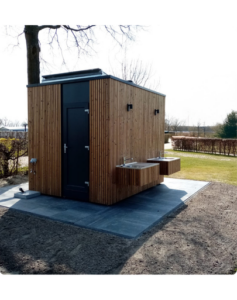
Private sanitation significantly increases both comfort and nightly rates.
The Nature Ensuite is a standalone private bathroom unit for campsites.
With an investment starting at €9,950 euros, operators can charge an additional 50 euros per night per pitch. This increases revenue without expanding accommodation inventory or land use.
Service based revenue and value creation for more campground revenue
A modern campground no longer generates income from accommodation alone. Services and experiences directly increase average spend per guest and strengthen overall profitability.
Digital infrastructure
High quality WiFi has become a revenue enabler rather than a cost center.
A stable high speed connection:
• Extends average length of stay
• Improves guest satisfaction and online reviews
• Increases willingness to pay premium nightly rates
Campgrounds with reliable digital infrastructure convert better and generate more direct bookings, reducing dependence on third party platforms.
On site services and experiences
Experiences transform a campground into a destination and stabilize income during shoulder seasons.
Examples include:
• Bicycle or boat rentals
• Camp shop and food service
• Cooking workshops using local products
• Agricultural experiences such as grape harvesting at nearby vineyards
• Guided nature or cultural activities
Events as off season revenue
Events provide an additional income layer outside peak holiday periods.
Common examples:
• Weddings
• Corporate retreats
• Team building events
These activities diversify campground revenue, reduce seasonality risk, and improve annual utilization of the site.

Sustainability as a financial lever
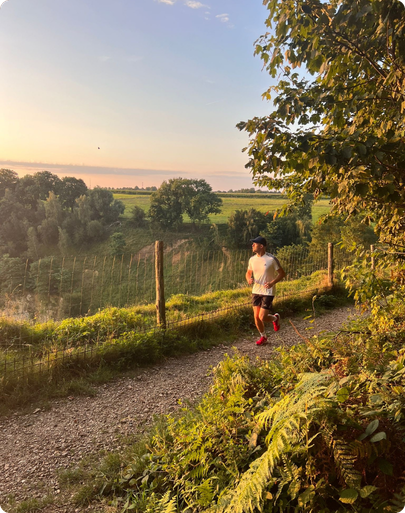
Sustainability investments increasingly impact profitability rather than only brand perception.
Cost reduction through sustainability
• Solar panels reduce long term energy expenses
• Lower exposure to energy price volatility
• Improved operational resilience
Sustainability and pricing power
Guests are willing to pay higher nightly rates for accommodations that align with sustainability values, especially in the premium segment.
Crossover Lodge sustainability approach
Crossover Lodge eco glamping tents are designed with full material utilization during production. All materials are used, and nothing is discarded.
Additional advantages:
• Long lifespan reduces replacement capital expenditure
• No permanent footprint on the landscape
• Demountable structures preserve land value
These factors improve both operational margins and long term asset quality.

Example ROI Calculation for a small to medium Campground
Initial investment
• Land purchase. 400,000 euros
• 2 glamping tents with bathroom. 2 x 23,500 euros = 47,000 euros
• 1 Nature Ensuite private sanitation unit. 9,950 euros
• 10 standard camping pitches
Total accommodation investment. 456,950 euros
Annual revenue projection
• Glamping tents
200 euros x 100 nights x 2 units = 40,000 euros
• Nature Ensuite
50 euros x 100 nights = 5,000 euros
• Camping pitches
50 euros x 100 nights x 10 pitches = 50,000 euros
Total annual revenue. 95,000 euros
At this level, the glamping units are recouped in approximately 1.5 years. Additional revenue continues to improve cash flow beyond the initial payback period.
Operation costs and burn rate
Understanding operating costs is essential when evaluating is a campground a good investment. Revenue alone does not determine profitability. The cost structure decides how much of that revenue turns into actual cash flow.
Staffing costs
Staffing is typically the largest controllable expense category.
• Cleaning and housekeeping typically account for 20,000 to 40,000 euros per year, depending on occupancy and accommodation mix
• Guest reception and support often cost 10,000 to 25,000 euros per year, especially when extended check in hours are required
• Grounds and technical maintenance usually range between 5,000 and 15,000 euros annually
Total staffing costs for a small to medium campground often fall between 35,000 and 80,000 euros per year, assuming a largely outsourced or employed staffing model. Owner operated campgrounds where cleaning, reception, and basic maintenance are handled in house can operate at significantly lower staffing costs.
Utilities and energy costs
Utilities are a growing cost factor and increasingly influence margin stability.
• Water usage and waste processing typically cost 5,000 to 15,000 euros annually
• Electricity costs can range from 8,000 to 25,000 euros per year, depending on energy prices, heating, and guest behavior
Campgrounds that invest in energy efficiency and solar solutions often stabilize these costs over time.
Marketing and distribution costs
Visibility drives occupancy, but comes at a price.
• Booking platform commissions usually represent 10 to 18 percent of booking revenue
• Website, SEO, and content creation typically cost 2,000 to 8,000 euros per year
• Paid advertising and social media campaigns often range from 3,000 to 10,000 euros annually
Operators who shift bookings toward direct channels can materially improve net margins.
Operational efficiency and profitability
Operational efficiency determines whether higher campground revenue translates into profit.
Luxurious accommodations, low maintenance structures, smart energy use, and a strong direct booking strategy reduce burn rate and shorten the payback period.
For investors assessing how profitable are campgrounds, cost control is as decisive as pricing power.
FAQ about owning a campground
Annual revenue for a small to medium campground depends primarily on location, accommodation mix, season length, and occupancy.
As a realistic reference:
• A campground with 10 to 20 camping pitches and limited premium accommodation typically generates between 75,000 and 120,000 euros per year
• Campgrounds that add glamping units and private sanitation frequently reach annual revenues between 120,000 and 250,000 euros
• Glamping units often generate the highest revenue per square meter, especially when rented year round
The decisive factor is not the size of the campground, but how efficiently the land is converted into revenue generating accommodation.
The largest cost categories affecting profitability are predictable and manageable when planned correctly.
Key expense categories include:
• Staffing for cleaning, reception, and maintenance
• Utilities such as water, electricity, and waste processing
• Marketing and booking platform commissions
• Ongoing maintenance and periodic replacement of accommodation
Energy and labor costs have the strongest impact on margins. Investments in durable structures, energy efficiency, and operational simplicity materially improve long term profitability.
A strong distribution mix increases occupancy and reduces dependency on any single channel.
Commonly used platforms include:
• Booking.com for international visibility and dynamic pricing
• National tourism platforms such as ANWB and regional destination websites
• Pitchup.com: The market leader in the UK and very strong across Europe (now expanding in the US and Australia).
• Google Business Profile for local discovery and direct bookings
• Airbnb: The heavy hitter for glamping, yurts, treehouses, and unique outdoor stays.
Yes. Leasing can significantly improve cash flow, especially during the startup and expansion phase.
Leasing reduces upfront capital expenditure and aligns monthly costs with seasonal revenue. This allows operators to scale capacity without locking excessive capital into fixed assets.
Crossover Lodge offers leasing options for its glamping structures, including:
• Flexible leasing terms for the Basic Unit and fully equipped glamping tents
• The ability to deploy premium accommodation faster without large initial investments
For many operators, leasing glamping units shortens the time to market and reduces financial risk while maintaining access to high quality, long lifespan accommodation.